
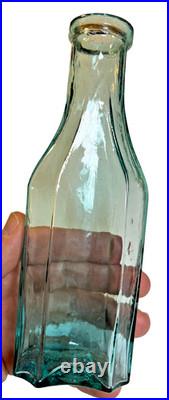
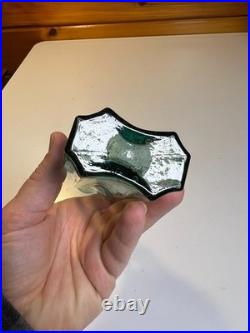
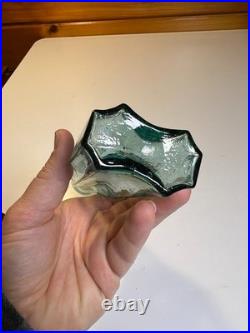
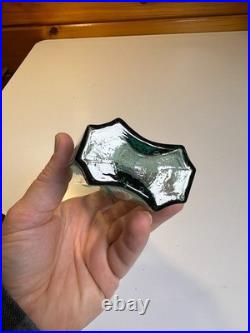
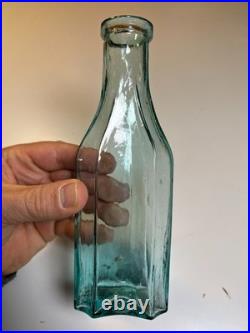
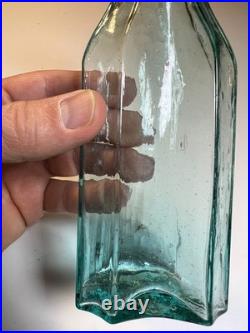
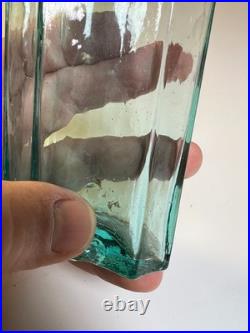
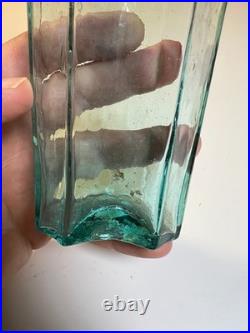
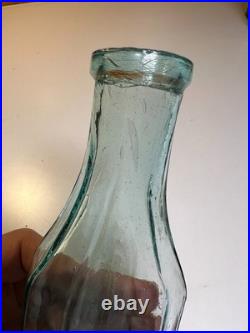
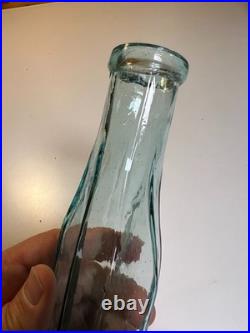
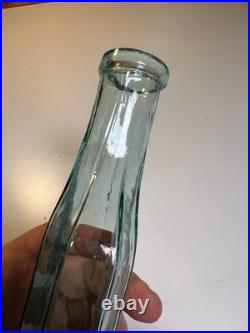
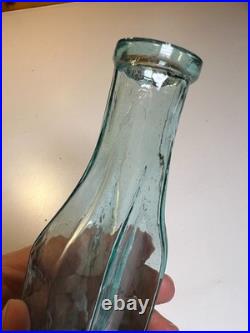
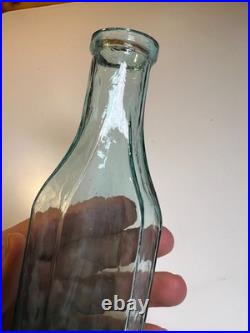
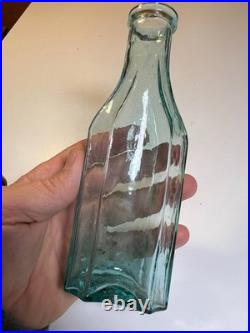
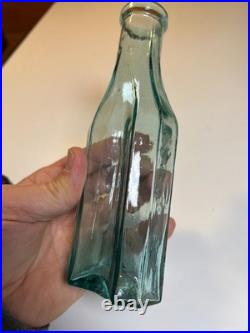
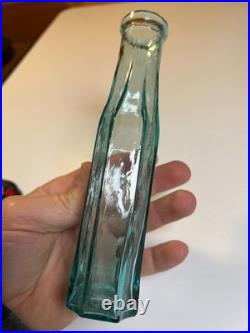
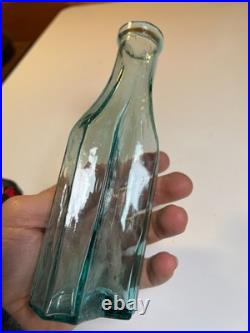
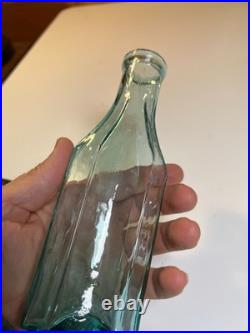
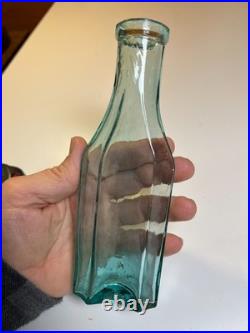
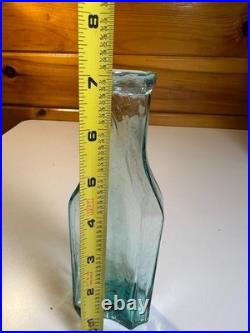

Blown in a two-piece mold with a distinctly rolled (applied) square collar lip and exhibiting strong whittled character, the glass is a rich Western deep aqua with sparkling clarity. The base is smooth-bottomed, indicating the post-pontil transition era that followed the 1850s’ open-pontil production. Measuring 7?? tall, this bottle has not been tumbled or polished – only gently rinsed with water – preserving its crisp surface and lively, undulating texture. Bubbles, striations, and a bit of asymmetry give it that unmistakable hand-tooled charm collectors prize. By the late 1860s, California was in the middle of its first industrial boom. The Gold Rush had subsided, but San Francisco was now a manufacturing hub for glass, iron, and food products bound for mining camps and new settlements. Railroads and steamships linked San Francisco to Portland, Sacramento, and Virginia City, fueling the spread of “fancy groceries” throughout the West. Bottles like this one held everything from pepper sauce to curry powder to flavored extracts, catering to miners and settlers hungry for a taste of civilization. Technologically, this decade marked the move from pontil rods to snap-case tooling and from open-hearth glass furnaces to coal-fired tank production. The square-collar lip seen here was a popular Western style – practical for corking yet decorative enough for display in a frontier kitchen or hotel dining room. Color: Deep Western aqua. Lip: Rolled/applied square collar. Base: Smooth (no pontil). Condition: Sparkling clean, no chips, cracks; Excellent whittled surface and bold glass character. Imagine a kitchen in Virginia City or San Francisco, 1869: cast-iron stove humming, a tin of imported curry open on the counter, and this vibrant aqua bottle catching light from a nearby window. A cook might pour out a dash of pepper sauce or vinegar to season a roast while the telegraph tapped news of the newly completed Transcontinental Railroad. Abraham Lincoln had been gone only a few years; Ulysses S. Grant was President; and the nation was healing from war even as it raced toward industrialization. In that setting, this modest glass bottle wasn’t just a container – it was evidence of the West’s transformation from wilderness to modern society.